RC-008 | Fabric Encyclopedia
Quilting precuts make it easier to buy coordinated fabrics without starting with full-yard cuts of every print in a collection. They are especially useful when a quilt pattern is designed around standard strip or square sizes, but the different names can be confusing at first.
Quick answer: What are quilting precuts?
Quilting precuts are fabric pieces cut to convenient sizes before sale. Common formats include fat quarters, 2½-inch strips, 10-inch squares and 5-inch squares. Brand names such as Jelly Roll, Layer Cake and Charm Pack are widely recognized, but exact contents can vary by manufacturer and collection.
Browse our quilting precuts to compare the formats currently available.
What is a fat quarter?
A fat quarter is a quarter-yard cut with wider proportions than a traditional quarter-yard strip. It is usually created by cutting a half yard across the width of fabric and then cutting that piece in half parallel to the selvage. Exact dimensions can vary slightly with fabric width.
Fat quarters are useful for blocks, appliqué, scrappy quilts, bags and projects that need a broader piece than a narrow quarter-yard strip.
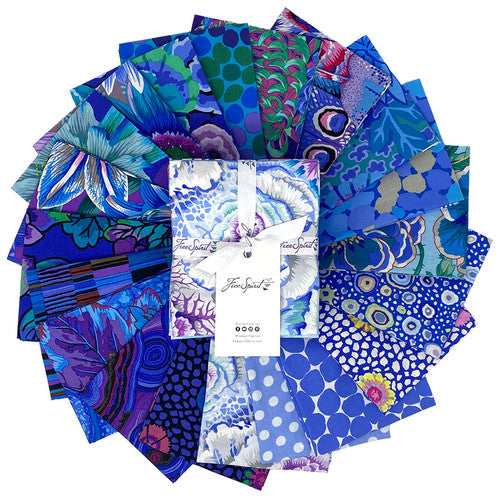
Shop fat quarter bundles for coordinated groups of prints.
What is a Jelly Roll?
Jelly Roll is a commonly used name for a bundle of 2½-inch-wide strips cut across the width of fabric. Strip counts vary. These bundles are popular for strip-pieced quilts, log cabin designs, rail-fence patterns and other projects built around long narrow pieces.
When a pattern says it uses one Jelly Roll, check the required number of strips rather than assuming every bundle contains exactly the same amount.
What is a Layer Cake?
A Layer Cake is a bundle of 10-inch squares. These larger squares can be cut into half-square triangles, quarter-square triangles, rectangles and smaller units, or used nearly whole in simple large-block designs.
What is a Charm Pack?
A Charm Pack is a bundle of 5-inch squares. Charm squares work well for patchwork, disappearing-block techniques, small projects, scrappy borders and many beginner-friendly quilts.
Are all precut bundles the same size?
No. The cut dimensions may follow common standards, but the number of pieces in a bundle can differ by collection and manufacturer. Some bundles include one of every print, while others may repeat prints or omit certain designs.
Always read the individual product listing before using a bundle as the basis for a pattern.
Do precuts include selvage?
It depends on the format and manufacturer. Some strip bundles may include a small amount of selvage on one end. Square precuts usually do not include usable selvage. Because the pieces are already cut to size, trim only what is necessary.
Should you prewash precuts?
Usually, small precuts are better left unwashed before piecing. Washing can cause fraying, curling and shrinkage that reduce their usable dimensions. If a pattern depends on the original cut size, that can create problems.
See Should You Prewash Quilting Fabric? for the full discussion.
Are pinked edges part of the measurement?
Manufacturers often use pinked edges to reduce fraying. Measurement conventions vary, so if a pattern requires extremely precise placement, test a few pieces before cutting the entire bundle. The key is consistency: use the same reference point for every piece.
Can I mix precuts with yardage?
Absolutely. Yardage is often needed for backgrounds, borders, binding and backing even when the main design uses precuts. Mixing coordinated precuts with quilting fabric by the yard is one of the easiest ways to expand a collection-based project.
Which precut is best for beginners?
There is no single best format, but 5-inch squares and 2½-inch strips are popular starting points because many patterns are written around them. Fat quarters are also very flexible because they provide enough fabric for a wide variety of cutting plans.
How do I choose the right precut?
- Start with the pattern. Use the format and piece count the pattern requires.
- Check bundle contents. Do not assume every manufacturer's bundle contains the same number of pieces.
- Look at value and contrast. A coordinated collection can still contain fabrics that blend together in a particular block.
- Plan background and borders. Precuts often supply the feature fabrics but not every yard needed for the quilt.
- Buy enough at the same time. Limited collections can sell through before a project is finished.
Common precut mistakes
1. Assuming brand names are universal specifications
Names such as Jelly Roll and Layer Cake are strongly associated with standard sizes, but piece counts and packaging vary.
2. Prewashing tiny pieces
Small cuts can lose critical dimensions through fraying and shrinkage.
3. Ignoring pattern piece count
Two bundles with the same cut size may contain different numbers of pieces.
4. Forgetting background, border and binding yardage
A precut bundle may not include everything the finished quilt requires.
The bottom line
Precuts are simply a convenient way to buy coordinated fabric in useful sizes. Fat quarters offer flexibility, strip bundles speed strip piecing, 10-inch squares provide generous cutting options, and 5-inch squares are ideal for compact patchwork. Match the format to the pattern, verify the piece count, and use yardage where the project needs additional fabric.
Continue learning: What Is Quilting Cotton? | Should You Prewash Quilting Fabric?