RC-011 | Quilt Planning
Quilt patterns often compress a lot of information into a small materials list. Once you understand the vocabulary, that list becomes a roadmap for what to buy and how the fabric will be used.
Start with the finished size
Confirm which quilt size you are making before reading the yardage column. Many patterns list several sizes side by side, and it is easy to accidentally use the requirements for the wrong version.
What does WOF mean?
WOF means width of fabric. A strip cut WOF generally runs from selvage to selvage across the fabric. The usable width is smaller than the full printed bolt width because selvages are normally removed.
See Fabric Grain, Bias & Selvage for more detail.
Why does a pattern list several fabrics separately?
Patterns may label fabrics A, B, C and so on because each one has a different job in the design. Before buying, mark which fabric is the background, focal print, border, binding or accent so you do not accidentally substitute a light fabric where the design needs a dark one.
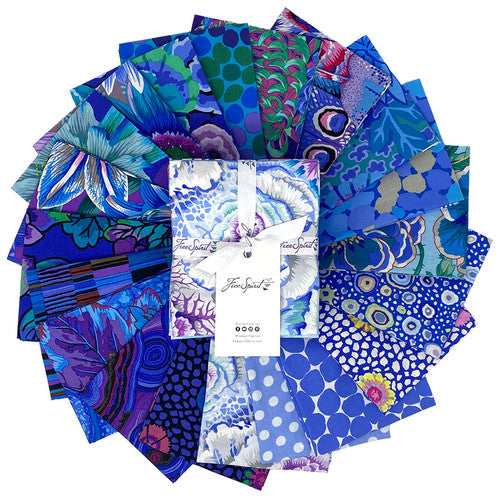
What if the pattern uses precuts?
Check both the cut size and the required piece count. One strip bundle or square bundle may not contain the same number of pieces as another.
See Quilting Precuts Explained.
What does 'yardage' actually mean?
Yardage is the linear length of fabric needed from the bolt. The pattern calculation assumes a certain usable fabric width and cutting layout. If your fabric is unusually narrow, highly directional or being fussy cut, you may need more than the listed amount.
Our quilting fabric by the yard is sold in 1/4-yard increments, making it easier to match many pattern requirements closely.
Directional prints need special attention
If motifs must face one direction, the pattern may include a note telling you to buy extra. Do not ignore it. Pieces that could normally be rotated may need to stay oriented the same way.
Binding and backing are separate calculations
Binding is usually listed independently from the quilt-top fabrics. Backing may be listed as standard-width yardage or as a finished backing dimension. If a longarm quilter will quilt the project, confirm the extra backing they require.
See What Is Wide-Back Fabric? for backing planning.
What does 'with nap' or 'one-way design' mean?
These notes mean orientation matters. Fabric cannot always be turned 180 degrees without changing the appearance, so the cutting layout may require additional yardage.
Read cutting instructions before buying substitutes
Two fabrics with the same total area are not always interchangeable. A pattern may need long continuous strips, large squares or a specific number of WOF cuts. Check the cutting section before replacing one cut with another fabric format.
A simple pre-purchase checklist
- Circle the quilt size you are making.
- Highlight the yardage column for that size.
- Identify background, focal, border, binding and backing fabrics.
- Check for directional-print notes.
- Check precut piece counts.
- Read the cutting section for unusually long or large pieces.
- Add a modest margin if the layout is tight or you plan to fussy cut.
The bottom line
A quilt pattern's fabric list is easier to understand when you connect each quantity to its job in the finished quilt. Confirm the size, usable width, direction, precut count, borders, binding and backing before you order. That small amount of preparation prevents many expensive mistakes later.
Continue learning: How Much Fabric Do I Need for a Quilt? | How to Choose Coordinating Quilting Fabrics